








The Life of Prophet Muhammad (PBUH) in Mecca: The Dawn of Islam
The Life of Prophet Muhammad (PBUH) in Mecca: The Dawn of Islam
The life of Prophet Muhammad (peace be upon him) in Mecca represents the foundational chapter of Islamic history. Born in 570 CE in the bustling trading hub of Mecca, his early life was marked by profound personal losses and a reputation for impeccable character. This period, leading up to the first revelation and the subsequent thirteen years of his prophetic mission in the city, laid the groundwork for a faith that would eventually transform the world. Understanding his time in Mecca is essential for grasping the essence of Islam, the resilience of the early Muslim community, and the unyielding faith of the Prophet himself.
Birth and Early Childhood
Muhammad ibn Abdullah was born into the respected Banu Hashim clan of the Quraysh tribe. His life began with hardship, as his father, Abdullah, passed away before he was born. Following the customs of the Meccan nobility, the infant Muhammad was sent to the desert to be nursed by a Bedouin woman named Halima Saadia. This practice was believed to provide a healthier environment and immerse the child in the pure Arabic language of the desert tribes.
When Muhammad was six years old, he returned to the care of his mother, Aminah. However, tragedy struck again when she fell ill and died during a journey back from Medina (then known as Yathrib). Now an orphan, he was taken in by his loving grandfather, Abdul Muttalib, a highly respected leader in Mecca. Just two years later, his grandfather also passed away, leaving the young boy in the care of his paternal uncle, Abu Talib. Despite these early sorrows, Abu Talib raised him with great affection and protected him fiercely throughout his life.
The Trustworthy Merchant (Al-Amin)
As Muhammad grew into a young man, he accompanied his uncle on trade journeys to Syria. During these travels, he gained valuable experience in commerce and encountered diverse cultures and religious traditions. He quickly earned a reputation for exceptional honesty, integrity, and fair dealing. The people of Mecca, regardless of their tribal affiliations, came to know him as "Al-Amin" (The Trustworthy) and "As-Sadiq" (The Truthful).
His impeccable character caught the attention of Khadijah bint Khuwaylid, a wealthy and successful Meccan businesswoman. Impressed by his honesty in conducting her trade, she proposed marriage to him. At the time, Muhammad was twenty-five, and Khadijah was forty. Their marriage was a union of profound love, mutual respect, and support. Khadijah became his closest confidante, his strongest supporter, and the mother of his children, standing by him through the most challenging trials of his prophethood.
The Quest for Truth and the First Revelation
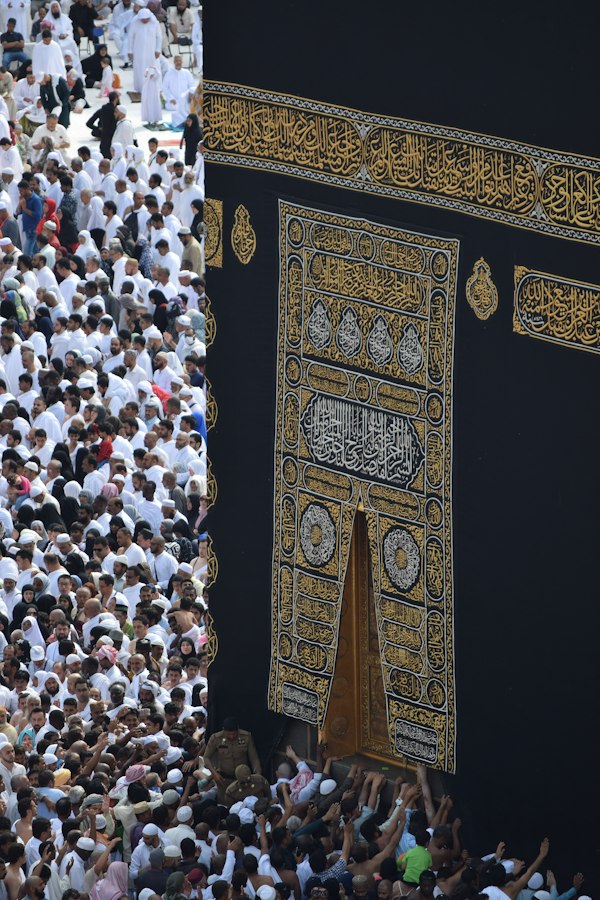
Despite his success and respected status, Muhammad was deeply troubled by the moral decay, social injustices, and rampant idolatry prevalent in Meccan society. The Kaaba, originally built by Prophet Abraham for the worship of the One God, had been filled with hundreds of idols. Seeking solace and spiritual clarity, Muhammad began to retreat to the Cave of Hira on the outskirts of Mecca for periods of meditation and reflection.
In the year 610 CE, during the month of Ramadan, when Muhammad was forty years old, a monumental event occurred that would alter the course of human history. While deep in meditation in the Cave of Hira, the Archangel Gabriel (Jibril) appeared to him and commanded, "Read!" (Iqra). Muhammad, who was unlettered, replied that he could not read. The angel embraced him tightly and repeated the command until finally revealing the first verses of the Quran: "Read in the name of your Lord who created..."
Overwhelmed and terrified by the encounter, Muhammad rushed home to Khadijah, asking her to cover him. She comforted him, reassuring him of his good character and affirming that God would never humiliate him. She then took him to her cousin, Waraqah ibn Nawfal, a Christian scholar, who confirmed that Muhammad had received the same divine revelation as the prophets before him, such as Moses and Jesus.
The Call to Islam and Early Persecution
For the first three years, Muhammad shared his message of monotheism (Tawhid) secretly with his closest family and friends. Khadijah was the first to embrace Islam, followed by his cousin Ali, his freed slave Zayd ibn Harithah, and his close friend Abu Bakr. As the number of followers slowly grew, the Prophet received a divine command to proclaim the message publicly.
When Muhammad openly called the people of Mecca to abandon their idols and worship the One True God, he faced fierce opposition from the Quraysh leadership. The message of Islam threatened their economic interests, which were tied to the pilgrimage to the idols in the Kaaba, and challenged their deeply ingrained social hierarchies.
The early Muslims, many of whom were poor, enslaved, or marginalized, endured severe persecution, torture, and social boycotts. The Prophet himself was subjected to insults, physical assaults, and assassination attempts. Yet, he remained steadfast, responding to hatred with patience and unwavering faith. His uncle, Abu Talib, continued to provide him with tribal protection, preventing the Quraysh from killing him outright.
The Year of Sorrow and the Night Journey
The tenth year of his prophethood, known as the "Year of Sorrow," brought immense grief to the Prophet. Within a short period, he lost his beloved wife, Khadijah, and his protective uncle, Abu Talib. The loss of his two greatest supporters left him vulnerable to increased hostility from the Quraysh. Seeking a more receptive audience, he traveled to the nearby city of Ta'if, only to be violently rejected and chased out by the townspeople.
In the midst of this profound hardship, Allah granted the Prophet a miraculous and comforting experience: the Isra and Mi'raj (The Night Journey and Ascension). He was transported from Mecca to Jerusalem and then ascended through the heavens, where he met previous prophets and spoke directly with Allah. This extraordinary journey reaffirmed his status as a messenger and provided him with the spiritual strength to continue his mission.
The Pledges of Aqabah and the Prelude to Migration
As the situation in Mecca became increasingly untenable, a glimmer of hope emerged from the north. During the annual pilgrimage season, Muhammad met with a group of men from Yathrib (Medina) who were receptive to his message. Over the next two years, these individuals, along with others from their city, secretly met with the Prophet at a place called Aqabah, pledging their allegiance to Islam and offering him and his followers a safe haven in Yathrib.
These Pledges of Aqabah marked a turning point. Recognizing that Mecca was no longer safe and that the community needed a secure base to practice their faith freely, the Prophet began instructing his companions to migrate to Yathrib in small, inconspicuous groups. This gradual exodus set the stage for the most pivotal event in early Islamic history: the Hijrah (Migration).
Conclusion
The Meccan period of Prophet Muhammad's life was a time of immense trial, unwavering faith, and the gradual dawn of a new spiritual era. From his early years as a trustworthy merchant to his profound encounters with the divine and the subsequent persecution he endured, these thirteen years shaped the character of the early Muslim community. The resilience demonstrated by the Prophet and his companions in the face of relentless opposition remains a powerful testament to their conviction. The lessons of patience, moral integrity, and reliance on God forged in the crucible of Mecca continue to inspire millions around the world, serving as the bedrock upon which the enduring legacy of Islam was built.