






The Golden Age of Islam: A Legacy of Innovation and Scholarship
The Golden Age of Islam: A Legacy of Innovation and Scholarship
The Islamic Golden Age was an extraordinary period of cultural, economic, and scientific flourishing in the history of Islam, traditionally dated from the 8th century to the 13th century. This era of intellectual brilliance began primarily during the Abbasid Caliphate and was characterized by a profound commitment to knowledge, religious tolerance, and the synthesis of diverse cultural heritages. During this time, the Islamic world became the undisputed center of global learning, producing advancements in mathematics, astronomy, medicine, philosophy, and art that would eventually pave the way for the European Renaissance.
The Catalyst: The Abbasid Caliphate and the House of Wisdom
The transition from the Umayyad to the Abbasid Caliphate in 750 CE marked a shift in focus from military expansion to cultural and intellectual consolidation. The Abbasids moved the capital from Damascus to the newly founded city of Baghdad in 762 CE. Strategically located between the Tigris and Euphrates rivers, Baghdad quickly grew into a bustling, cosmopolitan metropolis, attracting merchants, artisans, and scholars from across the known world.
The zenith of this intellectual movement was catalyzed by Caliph Harun al-Rashid and his son, Caliph al-Ma'mun, who established the legendary Bayt al-Hikmah (House of Wisdom) in Baghdad in the early 9th century. The House of Wisdom was a grand library, translation institute, and research academy. Here, scholars of various faiths—Muslims, Christians, Jews, and Zoroastrians—worked collaboratively to translate the vast corpus of classical knowledge from Greek, Persian, Syriac, and Indian sources into Arabic. This monumental Translation Movement preserved the works of Aristotle, Plato, Galen, Euclid, and Ptolemy, which might otherwise have been lost to history.
Advancements in Mathematics and Astronomy
The scholars of the Golden Age did not merely translate ancient texts; they rigorously analyzed, critiqued, and expanded upon them. In mathematics, the Persian scholar Muhammad ibn Musa al-Khwarizmi made groundbreaking contributions. His seminal work, "Al-Kitab al-Mukhtasar fi Hisab al-Jabr wal-Muqabala," laid the foundational principles of algebra (the word "algebra" itself is derived from "al-Jabr"). Al-Khwarizmi also played a crucial role in introducing the Hindu-Arabic numeral system, including the concept of zero, to the Islamic world and subsequently to Europe, revolutionizing mathematics and commerce.
Astronomy was another field that saw massive leaps forward, driven in part by the religious requirements of Islam, such as determining the precise times for daily prayers, the direction of Mecca (Qibla), and the lunar calendar. Islamic astronomers built massive observatories in cities like Baghdad, Maragheh, and Samarkand. They refined the astrolabe, a complex navigational instrument, and created highly accurate star catalogs and planetary tables. Scholars like Al-Battani improved upon Ptolemy's geocentric model, calculating the solar year with remarkable precision.
Revolutionizing Medicine and Healthcare
Islamic medicine during the Golden Age was arguably the most advanced in the world, characterized by a holistic approach, empirical observation, and the establishment of the first true hospitals (Bimaristans). These hospitals were secular, state-funded institutions that treated patients regardless of their religion or social status, and they also served as medical schools and research centers.
Two towering figures dominated Islamic medicine: Al-Razi (Rhazes) and Ibn Sina (Avicenna). Al-Razi, a brilliant clinician, was the first to accurately distinguish between smallpox and measles. He emphasized the importance of clinical observation and medical ethics. Ibn Sina, often referred to as the "Prince of Physicians," authored "The Canon of Medicine" (Al-Qanun fi al-Tibb). This massive encyclopedia synthesized Greek and Islamic medical knowledge and remained the standard medical textbook in both the Islamic world and European universities for over six centuries. Another notable figure, Al-Zahrawi from Islamic Spain, is considered the father of modern surgery; he invented numerous surgical instruments and procedures still in use today.
Philosophy, Optics, and the Scientific Method
The Golden Age was also a time of profound philosophical inquiry. Islamic philosophers, known as the Falasifa, sought to harmonize the rationalism of Greek philosophy (particularly Aristotelianism) with Islamic theology. Thinkers like Al-Kindi, Al-Farabi, and later Ibn Rushd (Averroes) in Spain, wrote extensive commentaries on Aristotle. Their works were eventually translated into Latin, profoundly influencing medieval Christian scholasticism and thinkers like Thomas Aquinas.
In the realm of physics, the polymath Ibn al-Haytham (Alhazen) made revolutionary contributions to optics. In his "Book of Optics" (Kitab al-Manazir), he rejected the ancient Greek emission theory of vision (which posited that eyes emit rays of light) and correctly proved that vision occurs when light bounces off objects and enters the eye. His reliance on rigorous experimentation and mathematical proof laid the groundwork for the modern scientific method.
Art, Architecture, and Literature
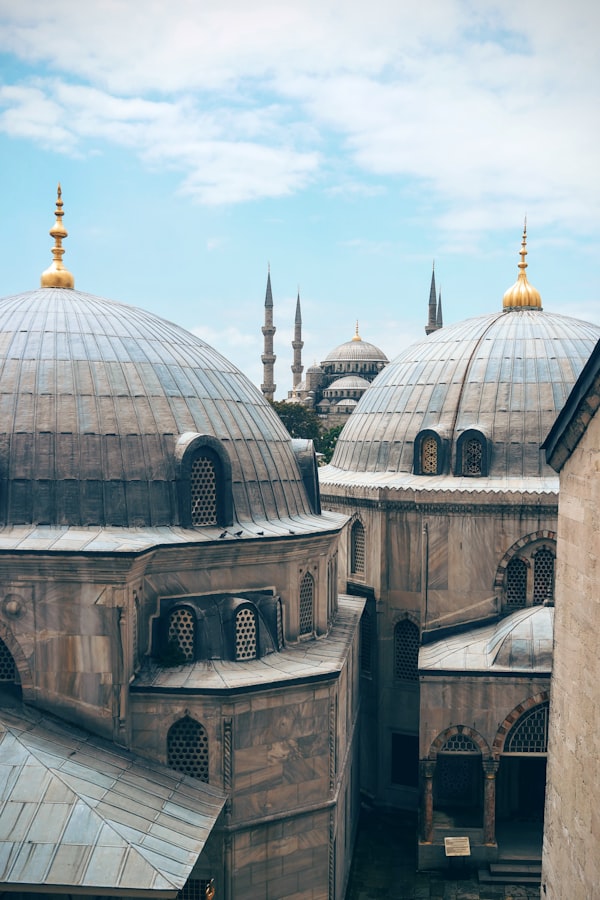
The intellectual vibrancy of the Golden Age was mirrored in its cultural output. Islamic art, constrained by religious prohibitions against depicting sentient beings, found breathtaking expression in intricate geometric patterns, floral arabesques, and masterful calligraphy. Architecture reached new heights of elegance and engineering, as seen in the majestic domes, minarets, and courtyards of mosques, palaces, and madrasas across the empire.
Literature also flourished, blending Arabic poetic traditions with Persian narrative styles. The era produced timeless works such as the "One Thousand and One Nights" (Arabian Nights), a rich tapestry of folktales, romances, and adventures that captured the cosmopolitan spirit of the age. Poetry remained a highly esteemed art form, with poets like Abu Nuwas and later Rumi exploring themes of love, mysticism, and the human condition.
The Decline and Enduring Legacy
The decline of the Islamic Golden Age was not a sudden event but a gradual process caused by a confluence of internal and external factors. Political fragmentation, the rise of competing dynasties, and economic shifts weakened the central authority of the caliphate. The devastating impact of the Crusades in the West and the catastrophic Mongol invasions in the East, culminating in the brutal sack of Baghdad in 1258 CE, are often cited as the definitive end of the era. The Mongols destroyed the House of Wisdom, famously turning the Tigris River black with the ink of thousands of priceless manuscripts.
Despite its end, the legacy of the Islamic Golden Age is immeasurable. The knowledge preserved, synthesized, and created by Muslim scholars acted as a vital bridge between the ancient world and the modern era. The translations of Arabic scientific and philosophical texts into Latin in places like Toledo, Spain, provided the intellectual fuel for the European Renaissance and the Scientific Revolution. The Golden Age stands as a testament to what humanity can achieve when diverse cultures collaborate in the relentless pursuit of knowledge.